Staff Picks for October 2025

October 31, 2025
Stankonia, released 25 years ago today, was OutKast's second straight masterstroke, an album just as ambitious, just as all-over-the-map, and even hookier than its predecessor. With producers Organized Noize playing a diminished role, Stankonia reclaims the duo's futuristic bent. Earthtone III (Andre, Big Boi, Mr. DJ) helms most of the backing tracks, and while the live-performance approach is still present, there's more reliance on programmed percussion, otherworldly synthesizers, and surreal sound effects.

October 30, 2025
Various Artists
For anyone who's collected 78-rpm records, enjoyed Harry Smith's Anthology of American Folk Music, or expressed interest in the great missing old-time and blues records of yesteryear, The Stuff That Dreams Are Made Of will be the Holy Grail. Whereas it isn't unusual for Yazoo to place a rarity on a new collection by Blind Blake or Blind Lemon Jefferson, this two-disc collection -- all 46 cuts -- is a testament to rarities.
October 29, 2025
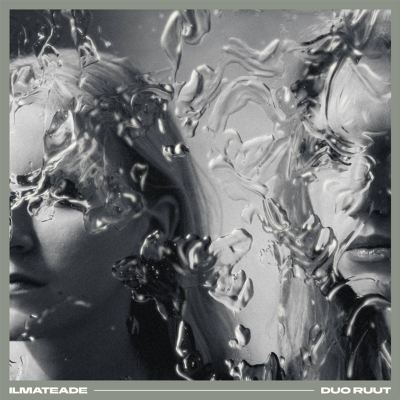
Second album from this under-the-radar Estonian duo who play elegant, minimalist folk on a shared instrument while singing intricate harmonies.

October 28, 2025
Delicate, tender, and yet tense enough to provide some emotional heft, this "mainstream" breakthrough for the Swedish singer/guitarist is a 2000s gem that yielded the minor hit "Teardrop," a cover of the Massive Attack classic. The rest of this fingerstyle set keeps it simple, the intensity peaking only as high as Gonzalez can vigorously strum his instrument. "Down the Line" and "Cycling Trivialities" are highlights on this no-skips beauty.

October 27, 2025
This classic recording is by one of the most creative heads in New York salsa. In 1975 The Good.., a New Directions release after Colon got fed up with the two-trombone sound, was the evidence that he could reach beyond his youthful sound into an idiom both wider and deeper.

October 26, 2025
The first masterpiece of what was only termed trip-hop much later, Blue Lines filtered American hip-hop through the lens of British club culture, a stylish, nocturnal sense of scene that encompassed music from rare groove to dub to dance. The album balances dark, diva-led club jams along the lines of Soul II Soul with some of the best British rap (vocals and production) heard up to that point, occasionally on the same track.

October 25, 2025
This is one of the most scathing topical folk albums ever made. Sainte-Marie sings in an emotional, vibrato-laden voice of war ("The Universal Soldier," later a hit for Donovan), drugs ("Cod'ine"), sex ("The Incest Song"), and most telling, the mistreatment of Native Americans, of which Sainte-Marie is one ("Now That the Buffalo's Gone"). Even decades later, the album's power is moving and disturbing.

October 24, 2025
Released 25 years ago today, Hybrid Theory took the basics of rap-metal fusion, discarded the lug-headed posturing and cartoonish profanity, and expanded its scope to include atmospheric electronics, a pop-savvy attention to hooks, and confessional lyrics that balanced angst with vulnerability.

October 23, 2025
If only every country songwriter could release a debut album as auspicious and fine as this one. Houston's Guy Clark, well known to the outlaw movement for his poetic, stripped-to-the-truth songs about ramblers, history, the aged and infirm, the drunken, the lost, and the simple dignity of working people who confront the darkness and joy of life quietly, issued Old #1 when his compadres had already been making waves with his songs.

October 22, 2025
Before playing it for friends recently, I described this album as "The M. Night Shyamalan movie of mid-seventies soul records" and if you know the shocking twist of the leadoff track "I Got The..." don't spoil it for the uninitiated. The rest of the album is also a pleasant surprise—tuneful and melodic soul, sometimes quietly funky and sometimes more in a singer/songwriter mode, but a fine listen throughout.

October 21, 2025
His third album, 1975's Nighthawks at the Diner (released 50 years ago today), was designed to show off Waits as an entertainer as well as a tunesmith; producer Bones Howe set up a nightclub facsimile in a recording studio, paired Waits with a solid band of jazz-inclined studio musicians, brought in an audience, and recorded what was in essence his first live album.

October 20, 2025
Demonstrating the abilities shown on Five Leaves Left didn't consist of a fluke, Bryter Layter featured another set of exquisitely arranged and performed tunes, with producer Joe Boyd and orchestrator Robert Kirby reprising their roles from the earlier release. Starting with the elegant instrumental "Introduction," as lovely a mood-setting piece as one would want, Bryter Layter indulges in a more playful sound at many points, showing that Drake was far from being a constant king of depression.
![Mary Poppins Returns [Original Motion Picture Soundtrack]](https://fastly-s3.allmusic.com/release/mr0004991602/front/400/9MSz4WCJCOuQ3Iue_rhiC5hUoDg0hsvx4F4sL4oO-nA=.jpg)
October 19, 2025
Bringing the popular children's books character to theaters for the first time since 1964, this 2018 film very much captured the spirit of the original Disney film musical, in terms of both tone and substance. With Emily Blunt taking over as an ageless, practically perfect Poppins, the Depression-era London sequel offered an arguably refreshing lack of contemporary references and irony, with score and songs by Marc Shaiman, who had help on lyrics from his frequent Broadway collaborator Scott Wittman. Also featured on the soundtrack are performances by the effortless Lin-Manuel Miranda, Dick Van Dyke, Meryl Streep, and Angela Lansbury.

October 18, 2025
After defining a certain category of indie pop with their early singles, Orange Juice's 1982 debut full-length switched things up a bit with slightly overzealous production. The major label budget afforded to them by signing with Polydor made their sound significantly brighter -- sometimes a little too vividly-- but the power of their songs overcomes any questionable production choices.

October 17, 2025
Where Simon had taken an eclectic approach before, delving into a variety of musical styles and recording all over the world, Still Crazy, released 50 years ago today, found him working for the most part with a group of jazz-pop New York session players, though he did do a couple of tracks ("My Little Town" and "Still Crazy After All These Years") with the Muscle Shoals rhythm section that had appeared on Rhymin' Simon and another ("Gone at Last") returned to the gospel style of earlier songs like "Loves Me Like a Rock."

October 16, 2025
The recent loss of D'Angelo leaves behind three terrific records, each approaching R&B with a fresh and groundbreaking angle. Arguably establishing the Neo-Soul subgenre with his first album, the recordings simmer with a cool sensuality particularly with the rap-flirting leadoff track "Brown Sugar," which reached number 27 on the Billboard Hot 100.

October 15, 2025
This mix from the Scottish duo is an extremely different animal compared to their helter-skelter first commercial set, focusing on the mind-altering qualities that often run through strains of jazz, rock, soul, disco, and purely electronic dance music. This imagines a utopian venue where Larry Heard opens for the Temptations, where Arthur Russell and Herbie Hancock meet to exchange ideas, where Syd Barrett and Ron Hardy are equally revered.
October 14, 2025
Various Artists
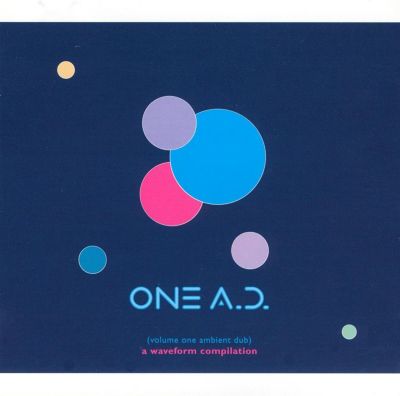
Largely drawn from the catalog of British label Beyond, One A.D. introduced American audiences to dubby ambient techno artists like Higher Intelligence Agency, Banco de Gaia, and Original Rockers. Best of all is A Positive Life's mesmerizing "The Calling," presented in its original form and a lengthy ambient mix.

October 13, 2025
Although Benny Carter was not actively playing much at the time (this was his only small-group recording during 1963-1975), he is heard in typically prime form. Very highly recommended.

October 12, 2025
Lift Your Skinny Fists Like Antennas to Heaven, released 25 years ago today, is a double-disc achievement of four works (each with multiple parts): "Storm," "Static," "Sleep," and "Antennas to Heaven." It is a windfall for any fan of ambient pop, orchestral rock, space rock, or simply lush string arrangements who understands how powerful love, melancholy, and frustration can be.

October 11, 2025
Unhalfbricking was, if only in retrospect, a transitional album for the young Fairport Convention, in which the group shed its closest ties to its American folk-rock influences and started to edge toward a more traditional British folk-slanted sound.

October 10, 2025
Cryptopsy's second album and its last with original vocalist Lord Worm, None So Vile offers just about everything a listener could want from an extreme death metal recording. It's incredibly tight, fast, and complex; the riffs are well-placed and darkly catchy; the guitar solos are completely over the top; and the vocals -- a mix of psychotic low-end growls and tortured screams -- are suitably intense and scary.

October 9, 2025
Over the years, Sparks has experimented with everything from hard rock to Euro-disco. But power pop is the primary focus of Indiscreet, which was released 50 years ago this month and went down in history as one of the band's best '70s albums.

October 8, 2025
Of all the many albums heralding the arrival of roots, and driving it to ascendency in the Jamaican and international reggae market, few were as uncompromising in vision as Ras Michael's Dadawah -- Peace & Love. The extraordinary power of the set's themes is echoed by the equally phenomenal backings, all conjuring up the most haunting of atmospheres. An astounding album that's lost none of its potency over the years.

October 7, 2025
Riding a recent popular resurgence with years of sold-out touring – albeit with a new singer – Static-X hit an early peak with Wisconsin Death Trip, a debut that was so good it overshadowed everything that followed. The full-throttle energy, corrosive riffs, mecha-drum mayhem, and the maniacal vocals of the late Wayne Static – which whiplashed between frantic howls and demonic gutturals – might have seemed novelty at the time, but all these years later it still hits like nothing else. Brutal, but danceable, and with pop-honed choruses, it was a ton of fun both then and now. The band will drop a super deluxe later this year to celebrate over 25 years of "evil disco."

October 6, 2025
Despite collecting unused songs written over a period of a decade, the project's seventh studio LP is unlike any other in the psychedelic pop outfit's catalog. It's a spare, singer/songwriter affair by Welshman Carwyn Ellis (with production by Liam Watson and longtime collaborator Edwyn Collins), who said that the songs were inspired by his admiration for American musicians. These included the likes of Glen Campbell and Townes Van Zandt, as well as Tin Pan Alley and early R&B legends of vocal pop.

October 5, 2025
Still an obscurity decades after its 1977 release, the Dwight Twilley Band's second album is an essential if under-appreciated part of '70s power pop history. Coming out of Tulsa, Oklahoma, Twilley and his partner Phil Seymour worked hard creating music that critics adored but the general public ignored, and when Twilley Don't Mind wasn't a smash hit, the group disbanded. What's left behind is an album of twangy, rocking, high-powered pop perfection, epitomized by the enduringly captivating single "Looking for the Magic."

October 4, 2025
The bludgeoning opener to Royal Blood's self-titled debut, "Out of the Black" is a riff-fueled onslaught that belies their two-piece status; with just a heavily processed bass guitar and a drum set between them, they make some four-piece rock bands look inconsequential.

October 3, 2025
Warning, released 25 years ago today, may not be an innovative record per se, but it's tremendously satisfying; it finds the band at a peak of songcraft and performance, doing it all without a trace of self-consciousness. It's the first great pure pop album of the new millennium.

October 2, 2025
As perhaps befitting an album that’s coolly, self-consciously alienating, Kid A, released 25 years ago today, takes time to unfold; multiple plays are necessary just to discern the music's form, to get a handle on quiet, drifting, minimally arranged songs with no hooks. This emphasis on texture, this reliance on elliptical songs, means that Kid A is easily the most successful electronica album from a rock band: it doesn't even sound like the work of a rock band, even if it does sound like Radiohead.

October 1, 2025
Anna Calvi took a five-year break after releasing 2013's One Breath, but the intervening time didn't diminish the grand sound she's been cultivating since her debut. From the title track's breathy opening to the soaring melody of "Away," her gift for elucidating the drama of a bygone era is intact and just as effective. If anything, the lustily provocative nature of her artistry reaches its dizzy apex on Hunter.